(Image source from: Canva.com)
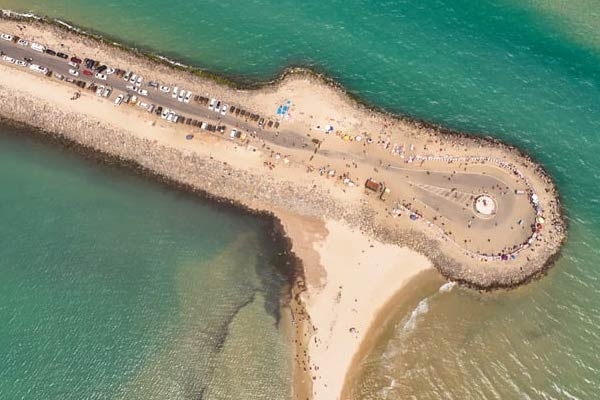
South India is full of mysteries, but few areas capture interest like the last road leading to the edge of the Indian mainland. Visitors expect a simple lookout, but once they step onto this slim piece of land, they realize it is much more profound. The waves crash loudly on either side, the breeze shares ancient tales, and the scenery seems to drift between folklore and reality. The drive feels like a trip to a location where history, geography, and stories come together. When you finally arrive at the end, it becomes clear why this place has intrigued adventurers, worshippers, and narrators throughout time. The final route in India is National Highway 87, which goes from Rameswaram to Dhanushkodi in Tamil Nadu and ends at Arichal Munai, the last reachable area of the Indian mainland before the ocean starts. This beautiful road runs along the coast in the Ramanathapuram district, located between the Bay of Bengal and the Indian Ocean, making it one of the most special drives in the nation. On clear days, travelers claim you can even see the outline of Sri Lanka in the distance across the water.
The journey commences in Rameswaram and continues for about 20 kilometers towards Dhanushkodi, which used to be a busy coastal town but is now deserted. From Dhanushkodi, the final stretch of NH 87 leads to Arichal Munai, the sandy point where the land meets the vast sea. This amazing section marks the southern end of Pamban Island and is the nearest Indian land to Sri Lanka. Dhanushkodi has a history filled with both myth and sorrow. According to the Ramayana, this sacred area is where Lord Rama and his troops began building Rama Setu, the famous bridge to Lanka, giving it great cultural and spiritual importance. The name "Dhanushkodi" means "end of the bow", referring to the spot where Rama supposedly started the bridge. In more recent times, Dhanushkodi was a lively port town with a train station, post office, and a flourishing community. Everything changed in December 1964 when a terrible cyclone hit and destroyed the entire town. The storm ruined buildings, flooded land, and swept away the railway, leading the government to declare the area unlivable. The remnants still remain today, quietly narrating the tale of a vanished town.
Traveling on the final road in India is different from most road trips for a few key reasons:
Sea on both sides: The road is located between two oceans, offering a stunning sight during the journey.
Cultural importance: It is linked to one of the strongest tales in Indian culture.
A deserted town at the end: The ruins of Dhanushkodi give the site a haunting yet beautiful feel.
Near Sri Lanka: The sea border is only around 18 to 20 kilometers away.
A stunning coastal ride: Travelers frequently describe this route as one of the prettiest coastal drives in India.
Thanks to the extension of NH 87, this road is now entirely suitable for vehicles and accessible to both private cars and local transport. The journey concludes at Arichal Munai, where vehicles are not allowed to go further, keeping the area untouched. Dhanushkodi continues to draw visitors not only for its stunning views but also for the feeling of being at the very edge of the nation.